
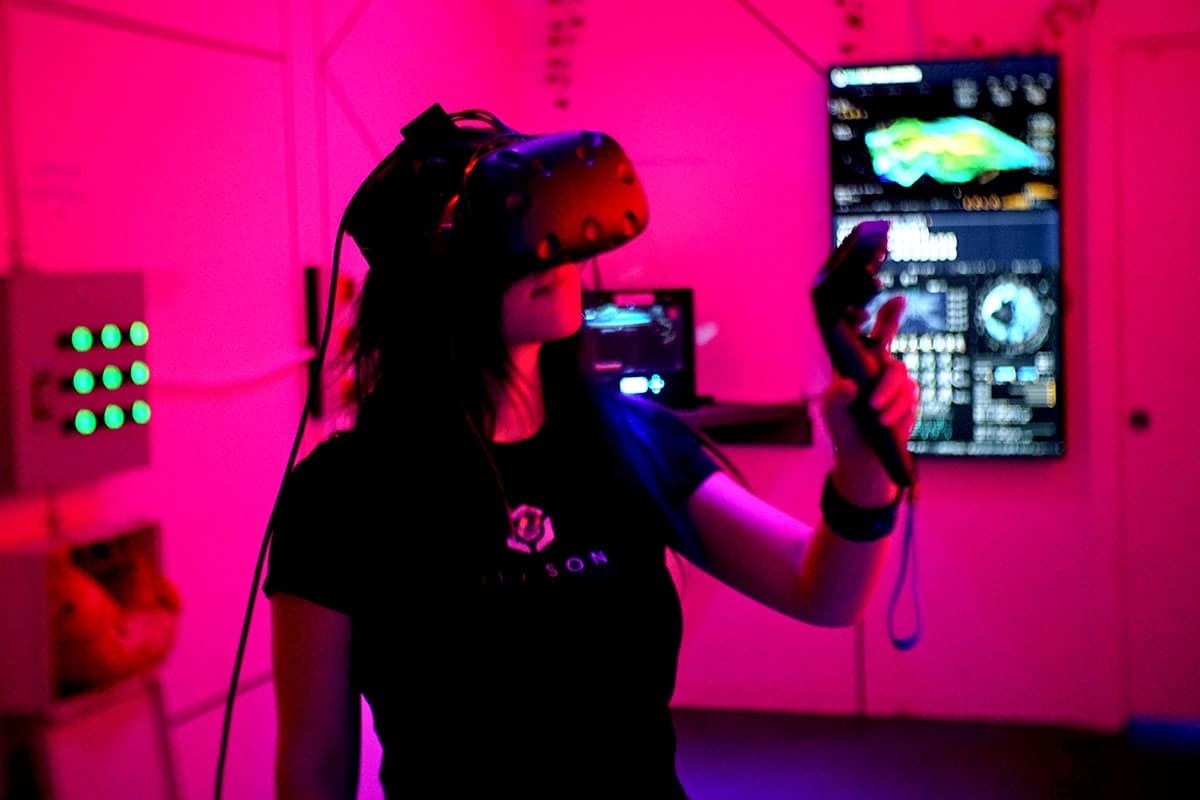
If you’ve ever done a traditional escape room, you’ll know the setup: keys, padlocks, hidden notes, and a fair amount of head-scratching teamwork. These puzzle-filled spaces rely on physical puzzles and clever hiding spots. They’re a blast but tech-enabled escape rooms are transforming the entire experience.
In a classic escape room experience, challenges are mostly tactile. In contrast, a technology-driven escape game packs the room with immersive effects, interactive technology, and digital storytelling from artificial intelligence to virtual reality worlds, making each playthrough unique and endlessly surprising.
How Do Tech-Enabled Escape Rooms Bring A New Level Of Immersion?
A tech-enabled escape room blends physical props with high-tech features to pull you deeper into the story. Using motion sensors, touchscreens, projection mapping, and virtual reality, the environment comes alive. Instead of just opening a combination lock, you might:
- Scan a fingerprint to open a locked door
- Trigger a motion-activated door to access a hidden room
- Solve a holographic riddle projected into the room
This approach transforms a traditional treasure hunt into a multi-sensory puzzle-solving experience where the room reacts in real time, creating a tech-forward escape room experience that feels alive, dynamic, and immersive.
How Is Technology Transforming The Escape Room Industry
The escape room industry is evolving fast. Escape room businesses are integrating:
- AI-driven clues that adapt to your actions based on the answers player provide
- Augmented reality (AR) overlays that reveal hidden messages to provide clues to solve puzzles
- Virtual reality (VR) simulations that transport you to virtual worlds outside of the physical escape room
- Projection mapping to instantly reshape the environment based on story driven themes and player interactions with the puzzles
These tools make the puzzles more interactive, the stories more believable, and the adventures more shareable online. In essence, they allow for a much more “magical” adventure as creators can more rapidly and easily build special effects that stand out. Combine these new technologies with new tools like AI coding, and even newer escape room owners can build fantastical, immersive experiences as the barriers to creation continue to fall. This hybrid of physical and digital gameplay is redefining the escape room industry and expanding what an escape room experience can be.
What Are The Immersive Room Experiences You Might Encounter?
Today’s immersive room experiences go far beyond “find the key in the drawer.” You might step into:
- A pirate ship that rocks beneath your feet as projected waves crash around you
- A sci-fi lab where holograms answer your questions
- A medieval dungeon where torches flicker after you solve a riddle
- An AI chatbot guide that gives you clues when you talk to it
- A VR submarine adventure through a storm
- A floor of pressure-sensitive tiles that unlocks a secret door
In a tech-enabled escape room, augmented reality can turn a bare wall into a clue-filled mural, while virtual reality might let you explore a location miles away all in one seamless story. These immersive puzzle rooms keep gameplay fresh and unpredictable.
What Is The Future Of Escape Room Innovation?
The future of escape rooms will bring even more ways to play, including:
- Hybrid physical-digital games linking players in different cities
- Remote play escape rooms for friends joining from anywhere
- Wearable sensors that track your movement or heart rate to trigger in-game events
- Dynamic storytelling systems that change puzzles and endings based on your choices
These advancements offer a variety of interactive entertainment options that traditional escape rooms could never provide. From immersive puzzles to responsive environments, the future of escape room experiences is limitless, especially as interactive technology becomes more affordable and advanced.
Quick FAQ: Tech-Enabled vs. Traditional Escape Rooms
Q: Are tech-enabled escape rooms harder than traditional ones?
A: Not necessarily. High-tech escape games can be easier or harder depending on design. The tech adds immersion and variety, not just difficulty.
Q: Do tech-enabled escape rooms still use physical puzzles?
A: Yes. Most combine hands-on challenges with digital puzzle solving for a balanced escape room experience.
Q: Will tech replace game masters?
A: Unlikely. Human hosts still guide the story and ensure everything runs smoothly in both traditional escape rooms and tech-enabled escape rooms.
If you’re curious about the best tech-enabled escape room experiences or want to design your own immersive puzzle room, check out our guide to immersive entertainment to see how technology is reshaping the escape room industry.