
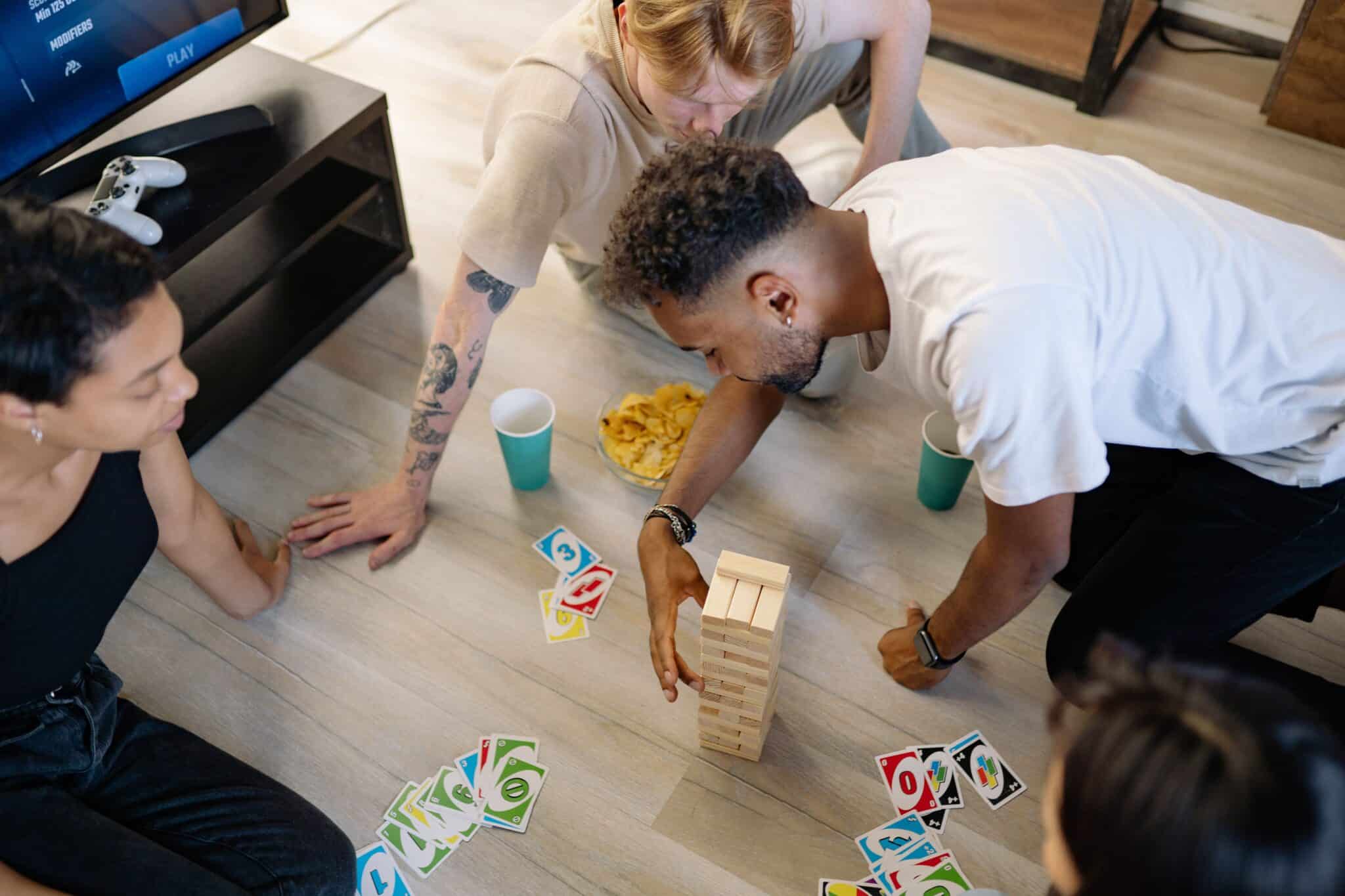
Cooperative games teach people to win together. Instead of one person trying to beat everyone else, the whole group shares the same goal and has to make decisions as a team. Escape rooms take that same feeling and move it off the table, where the pieces become objects, sounds, locks, screens, clues, and people moving through the same space.
Cooperative Play Starts With Shared Attention
A good cooperative board game asks everyone to notice different things at once. One player may track the timer, another may watch resources, and someone else may think a few moves ahead. The table becomes a shared map, and the group has to keep bringing attention back to what matters most.
Escape rooms do something similar, but the map is not flat. It is all around you. A teammate may be looking under a shelf while another is reading a note, and someone else may be testing a pattern on a wall panel. That changes the rhythm of cooperation because no one can see everything from one seat.
This makes shared attention more active. Instead of leaning over a board, players have to speak clearly, move with purpose, and make sure useful information reaches the group. The room rewards people who can notice details without disappearing into their own corner of the game.
The Table Becomes The Whole Room
Board games usually keep information contained. Cards, tokens, dice, and boards are right there, even when some information is hidden. Players know where the game lives.
In an escape room, the game lives everywhere. A drawer, a symbol, a screen, a sound, or a physical object may all matter, and the group has to decide what belongs together. This physical spread creates a different kind of teamwork because attention gets divided naturally.
That can be exciting, but it can also get messy. A team might have five active ideas at once and no shared understanding of which one is closest to working. The best groups learn to pause just enough to connect the pieces. They do not need a formal meeting in the middle of the room, but they do need a habit of bringing discoveries back into the group conversation.
Helpful habits include:
- Saying what you see in plain language
- Keeping related items near each other when allowed
- Letting teammates know when an idea has already been tried
- Asking who has the missing piece before assuming no one does
- Rotating attention when one puzzle starts eating too much time
These small behaviors make the room feel less chaotic. They turn scattered objects into a shared puzzle.
Pressure Changes How People Lead
Cooperative board games often create a familiar problem: one confident player starts making decisions for everyone. Many players call this quarterbacking, which means one person takes over the group’s choices instead of letting everyone participate.
Escape rooms can reduce that pattern, but they do not remove it automatically. Because the work is physical and spread out, one person cannot easily control every puzzle at once. Different people may step forward at different moments because the room keeps changing the kind of thinking it asks for.
Someone quiet at the table may be great at spotting visual patterns. Another person may be better at organizing loose information. Someone else may stay calm when the timer starts to feel louder. The room gives those strengths more chances to appear because the challenge is not limited to one type of move.
Still, teams have to be careful. A loud voice can still dominate, especially when pressure rises. The better pattern is shared leadership, where the person closest to the useful insight gets room to lead for a moment, then makes space for the next person when the problem changes.
Communication Becomes Part Of The Game
In a board game, players usually communicate because they want to make the best move. In an escape room, communication is part of the move itself. A clue that stays in one person’s hand may as well not exist yet, because the group cannot use what it does not know.
This is where escape rooms become a useful mirror for everyday teamwork. Many group problems are not caused by a lack of effort. They come from people working with different pieces of information and assuming everyone else sees the same picture.
A good escape room makes that gap obvious. If three people are trying separate solutions without comparing what they know, the team slows down. Once they start sharing clearly, the pace changes. People stop repeating the same attempt, patterns become easier to see, and the group can make better choices with less friction.
The lesson is simple, but it matters: cooperation depends on making private information useful to everyone.
The Best Teams Stay Flexible
Cooperative play works best when people can change course without taking it personally. A theory might seem strong, then fail. A clue might look important, then turn out to belong somewhere else. A teammate may suggest something that sounds odd at first but unlocks the next step.
Escape rooms make this flexibility feel natural because feedback is immediate. A code works, or it does not. A mechanism opens, or it stays closed. The group gets information quickly, and the next move is to adjust rather than debate endlessly.
That kind of flexibility is harder than it sounds. People often get attached to their own theories, especially when they have spent time building them. The teams that do well tend to treat wrong attempts as useful information. They narrow the field, clear away weak guesses, and keep moving.
Why This Cooperative Feeling Matters At Reason
That is part of why, at Reason, we think about escape rooms as a way for cooperation to become visible. The same habits that make a group better at a cooperative game, such as listening, sharing context, dividing attention, and giving different people room to lead, become easier to notice when everyone is moving through the same physical challenge.
We see that dynamic show up when a group stops acting like several separate players and starts acting like one flexible team. The point is not that everyone communicates perfectly from the beginning. The useful part is watching people adjust together, build trust through small decisions, and leave with a clearer sense of how they work under shared pressure.
Finally…
Escape rooms feel like cooperative games because they ask players to think as a group, manage limited time, and combine partial information into one shared plan. The difference is that the board has expanded into a room, and the pieces now require movement, conversation, and trust.
That physical shift makes cooperation feel more immediate. You can see when a team is scattered, and you can feel when it starts to sync. For players who already love cooperative board games, escape rooms are a natural next step. For everyone else, they are a practical reminder that winning together usually starts with paying attention together.